





New York State Mesonet Expands Weather Monitoring at Chautauqua Lake Through Jefferson Project Partnership
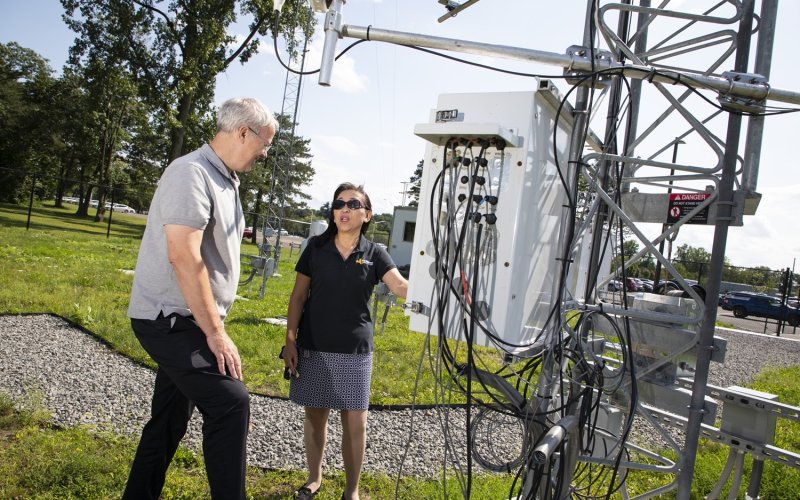
ALBANY, N.Y. (April 7, 2026) — The New York State Mesonet at the University at Albany is expanding environmental monitoring at Chautauqua Lake through a new partnership with the Jefferson Project, bringing two advanced weather stations on site.
The new stations will provide year-round weather data to strengthen ongoing modeling and research efforts aimed at understanding and mitigating water quality issues, including those driven by excess nutrients and harmful algal blooms (HABs).
The Jefferson Project — a collaboration of scientists, engineers, and technologists from Rensselaer Polytechnic Institute (RPI) and the Lake George Association — has been working with Chautauqua Institution to investigate and respond to changes affecting Chautauqua Lake, including HABs, climate change, road salt, invasive species, and nutrient loading and runoff.
The project’s monitoring and modeling capabilities will now be strengthened through the new partnership with NYS Mesonet — the nation’s largest and most advanced weather detection network, housed at the University at Albany.
UAlbany’s Atmospheric Sciences Research Center (ASRC) will also host the computer systems that support weather, hydrological (runoff), and hydrodynamic (lake circulation) modeling for both Chautauqua and Lake George watersheds. The systems will integrate data from the Jefferson Project’s smart sensor network, which includes instrumented buoys and tributary monitoring stations that track physical, chemical, and biological conditions across the lake.
By bringing together the resources and expertise of RPI and UAlbany to Chautauqua, the project can better track conditions, improve predictions, and expand its ability to protect and manage the lake.
“By integrating our New York State Mesonet weather data with the Jefferson Project’s sensor network, we can improve forecasts of conditions that contribute to harmful algal blooms and other water quality challenges at Chautauqua Lake,” said Chris Thorncroft, director of UAlbany’s Atmospheric Sciences Research Center. “This project is a powerful example of how scientific collaboration across institutions can deliver actionable solutions that support community resilience.”
“Expanding our collaboration with the New York State Mesonet and ASRC allows us to build on the strong foundation we’ve established at Chautauqua Lake,” said Kevin Rose, director of the Jefferson Project and professor at RPI. “By working across institutions, we’re able to better understand how environmental conditions drive changes in the lake.”
“The health of Chautauqua Lake is integral to the success of our community and region,” said Kyle Keogh, Interim President of Chautauqua Institution. “This partnership strengthens the science behind the Jefferson Project and supports the shared goal of ensuring the lake remains a resource for residents, visitors and the region.”
In addition to supporting research, the stations will provide local residents with access to real-time weather information through a public website, including winter conditions such as precipitation type, snow depth, and accumulation.
“The New York State Mesonet has operated successfully for a decade as the state’s premier early warning weather detection system,” said NYS Mesonet Director June Wang. “Its value now extends far beyond weather. This project shows how the Mesonet’s proven expertise can be leveraged to build new sites, networks and services that strengthen environmental monitoring statewide and help address a broader range of environmental challenges, such as harmful algal blooms.”
The Jefferson Project at Chautauqua Lake is funded through the New York State Governor's Office through the Environmental Facilities Corporation and managed by the New York State Department of Environmental Conservation. The Jefferson Project was founded in 2013 as a partnership between RPI, IBM, and the Lake George Association and has expanded from Lake George to include Chautauqua Lake over the past several years.
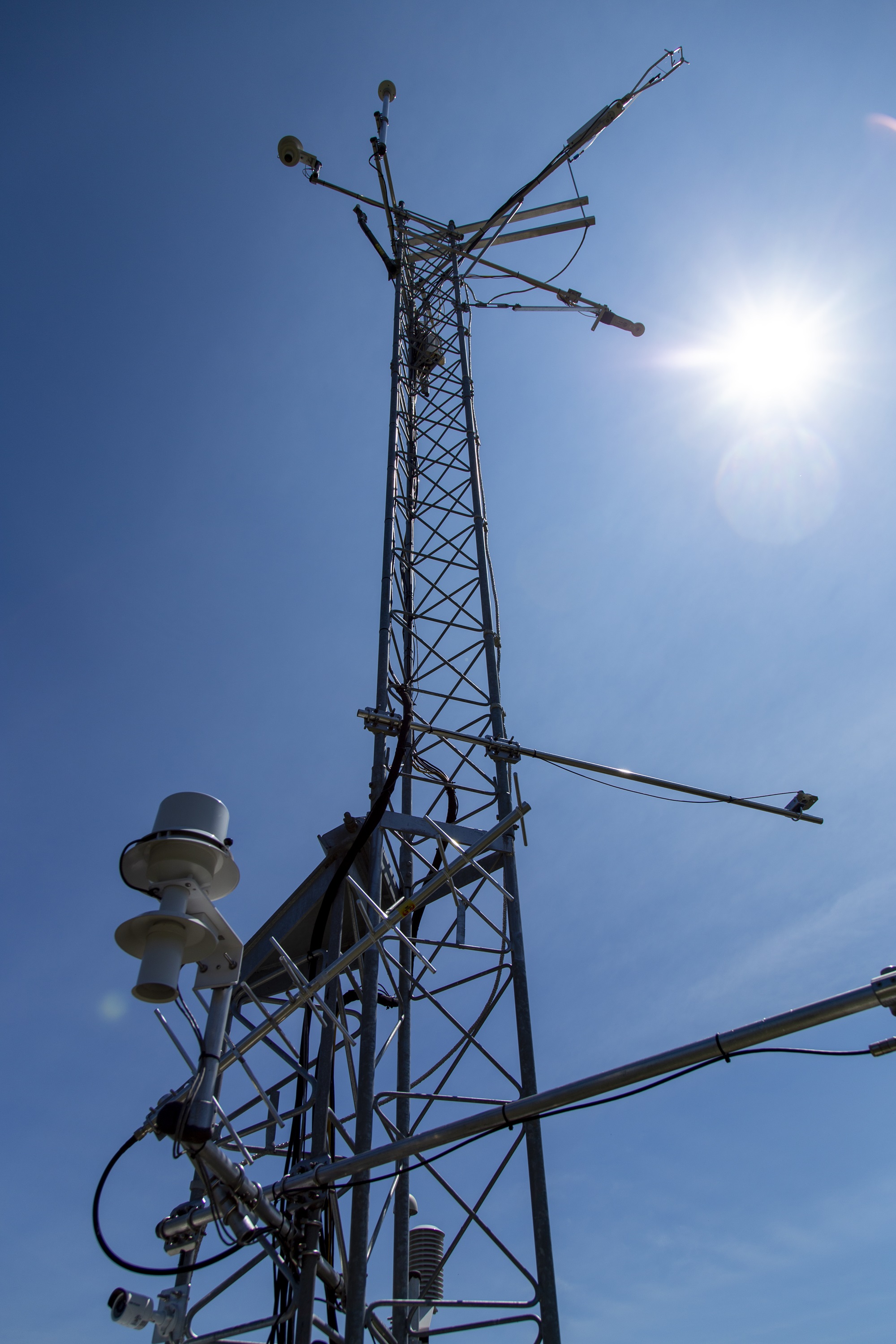
The NYS Mesonet features 127 standard weather stations spaced about 17 miles apart across the state. Designed, installed and operated by UAlbany, each site includes automated sensors that measure weather conditions in real time, along with a camera capturing current conditions. Data is collected every five minutes, supporting weather prediction models and decision-making tools across New York.